
Prompt #24
Serendipity

Hello, again!
Monday arrives and with it, another prompt.
Note: Usually, I’d add a note here, telling impatient people to head to the bottom of the page for this week’s prompt, but I’m not going to do that today. You’ll just have to read the whole thing!
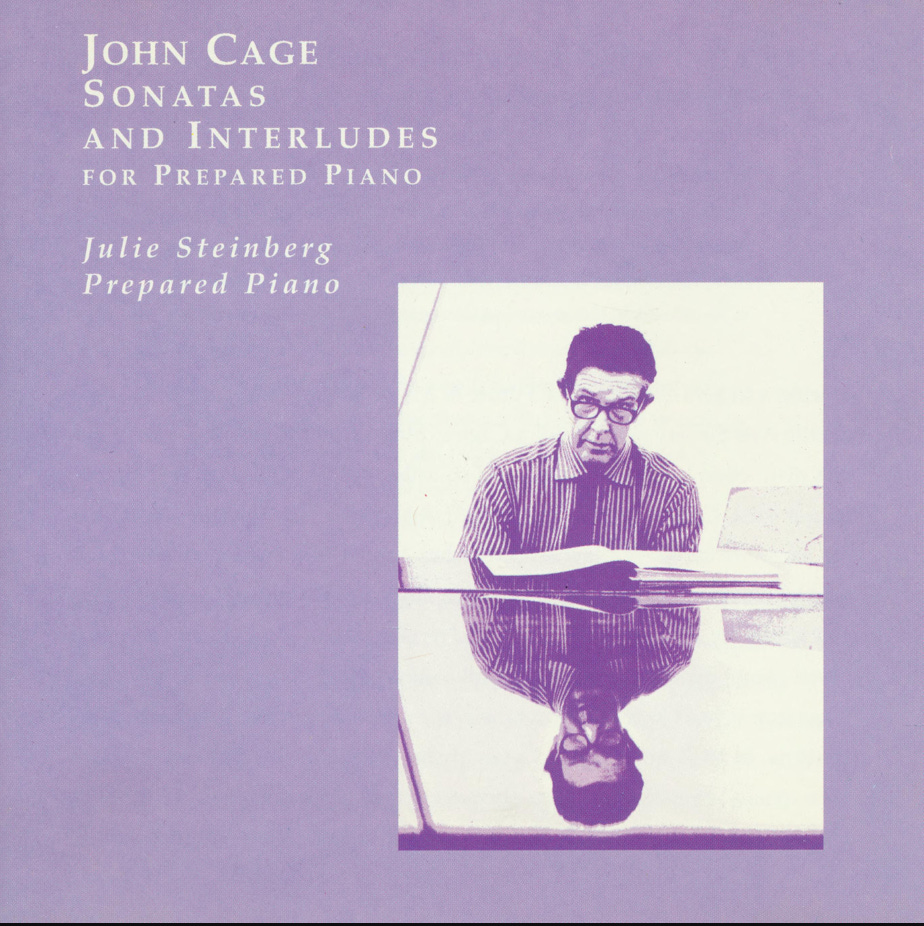
Serendipity: “the occurrence and development of events by chance in a happy or beneficial way.”
Have you heard of the composer and writer John Cage? He was a radical! I was lucky enough to go to one of his concerts a million years ago. I remember partway through the evening wondering if the whole thing was one big joke. (It wasn’t.) Only later, did I understand what I had seen and heard. (Thank you, long ago somewhat smarmy guy who took me on the date to see Cage. I forget your name, but I’ve never forgotten the concert.)
Cage famously relied on “chance procedures” (often by relying on the I Ching) to compose his music, paintings, poetry, lectures, and at least one film.
Perhaps his most famous composition is “4’33” in which a pianist sits silently in front of a piano for four minutes and thirty-three seconds—without playing any notes. But Cage knew that those four minutes and thirty-three seconds would be full of sound: feet shuffling, someone coughing, an air unit humming, perhaps a car horn beeping outside. All of the sounds would happen by chance—not planning. And so every time the piece was performed, it would be different.
Why do I bring up John Cage? Because this week, we’re going to use our own “chance procedures” to launch our way into stories.
It can be fun, when writing, to let choices be made by chance.
For instance, a common writing prompt instructs you to open a book to any page, point a finger somewhere on the page without looking, and then use whatever sentence you’ve landed on as a sentence in your story. Or you pick four words at random from a book and use those words somewhere in your story. And so on.
Today, we’re going to use an element of chance to come up with a first sentence (or a title) for a story. And then we’ll write, using that first sentence (or title).
Here are the instructions:
Go to the browser on your computer and type in a very short phrase—any phrase that strikes you. Your computer will automatically try to figure out what sentence you’re typing and will offer up a few longer choices.
For instance, when I type the words “If only” my browser gives me these possibilities (among others):
“If only I had told her”
“If only you loved me like you love getting high
If I add a bit more to that phrase—“If only I could”—my computer offers up the following:
“If only I could make a deal with God”
“If only I could fly”
“If only I could be so grossly incandescent”
“If only I could hibernate”
I have tried this with many phrases and it’s always surprising to see what pops up.
Here are some possibilities for you to try (remember to add more words to these phrases if you want more options):
I love it when
Could I please
What if I asked you
What would you
Do you think
How about I
How does it feel
When can you
What happens if
Note: I have not tried any of those, so I don’t know what you will find! And if none of these spark anything for you, put your own phrase in the browser bar and see what happens.
If you post in the comments, LET US KNOW WHAT PHRASE YOU POPPED INTO THE BROWSER BAR.
As always, 400 words, max. (Write more if you wish, but only post 400. Thanks!)
Have fun! No stress!
I don’t have any examples of stories created by chance for you this week. But here is a story by the late great Alice Munro with the title “Chance.” It’s from the New Yorker—you should be able to access this one for free if you aren’t a subscriber to that magazine, unless you’ve already used up your free-accesses for the month.
See you next week!
[Deleted]
I opened a book and saw the word coracle.
That’s him.
Who?
That’s the guy I saw get out of the coracle.
What coracle? What’s a coracle?
Look how old he is, like he paddled out of the Middle Ages.
Maybe he did.
A coracle is a boat from the Middle Ages. It’s round. Look, right there.
What’s he doing here?
Maybe he landed for supplies.
I’m going to have a look inside the coracle.
Maybe you shouldn’t.
Maybe Maybe Maybe. Jesus. Come let’s have a look. He’s gone up the street.
I don’t think we should mess with it.
Maybe follows and they stop beside the boat and look inside.
Wavelets make light frivolity on the purple pebbled beach. More shingle than beach. Smoke from many cooking fires rises from the myriad islands. They cook sea bird eggs, and sometimes birds too. The gannets have the loveliest yellow white feathers. From a quarter mile up they bomb straight into the sea.
What is in the boat is not part of this story. At least not the told part of the story. You will have to figure out for yourself what’s in the coracle. Which was undoubtedly genuine, straight out of the Middle Ages, 500 - 1500 AD, more or less. People died and the living forgot things.
What if he brought plague or something with him?
Maybe he did.
Don’t touch anything. In fact, we should stand upwind.
They move to the other side of the coracle. It’s woven of hollow reeds. A carved paddle leans on the side. That’s one thing inside the coracle, the color of a hay bale left outside a long time.
What would you take with you from the Middle Ages if you paddled away in a coracle?
Bow and arrows. Snares. An AK-47.
They burned books and forgot how to read.
There’s no books in this coracle.
No. Nothing in the coracle is part of this story. The cargo is beside the point.
Only the monks made books and knew how to read. The rest were stupid.
What’s your point?
Look. Here he comes with a bulging sack.
Let’s watch from the wall.
We won’t know what’s in the sack.
No we won’t. What are you going to do about it?
Kill him. Steal the sack.
Ridiculous.
Maybe.
You’re better off not knowing.
The wise thing would be to walk away.
So all of this for naught?
All for naught, my friend.