
Prompt #101
Let's go home.

Hi, everybody.
I hope all who celebrated had a great Thanksgiving. I didn't have to cook this year—my cousins handled that huge chore. But I was responsible for the key ingredient in everyone’s holiday meal. That’s right. I brought the canned black olives. In my family, if there were no black olives, it just wasn’t Thanksgiving. We kids would shove olives on all of our fingertips and then pluck them off into our mouths, one by one, before filling up again. Along with my dearly departed Uncle Lewis carving the turkey, my Aunt Shelly’s strange purple jello-thing, my mom’s humongous salad, the laughter and home movies, and the mystery of “who was smoking pot in the downstairs bathroom” (it was Cousin Irene!), the black olives were always an integral part of the scene. So I brought them and all was well.
Not!
But I’m going to save that story for another time…
Today, we’re talking about “home.”
I grew up in Seattle.
For a long time, I felt that city inside of me, felt it would always be the place I think of when I say “home.” But lately, it’s become more and more clear that Seattle isn’t my idea of home anymore. It’s a place I left behind years ago. And when I go back, there’s a lot I don’t recognize. Well, things change, don't they?
Not too long ago, I came across something called “Theseus’ Paradox.” (Hang with me here—this will relate to the idea of home, I promise.)
Theseus Paradox is a thought experiment….
…about whether an object is the same object after having all of its original components replaced over time, typically one after the other. (Wikipedia)
“The Ship of Theseus” comes from Greek mythology. And it was those ancient Greeks who came up with this mind-bending experiment.
For clarity, the experiment goes like this: Let’s say you have a ship (The Ship of Theseus) and it’s falling apart. So you replace each wrecked part bit by bit until eventually you have replaced every last piece of the original ship. Now, is it still the same ship? Is it still the Ship of Theseus? And if not, at what point did it cease being the original ship?
I actually love thinking about that paradox.
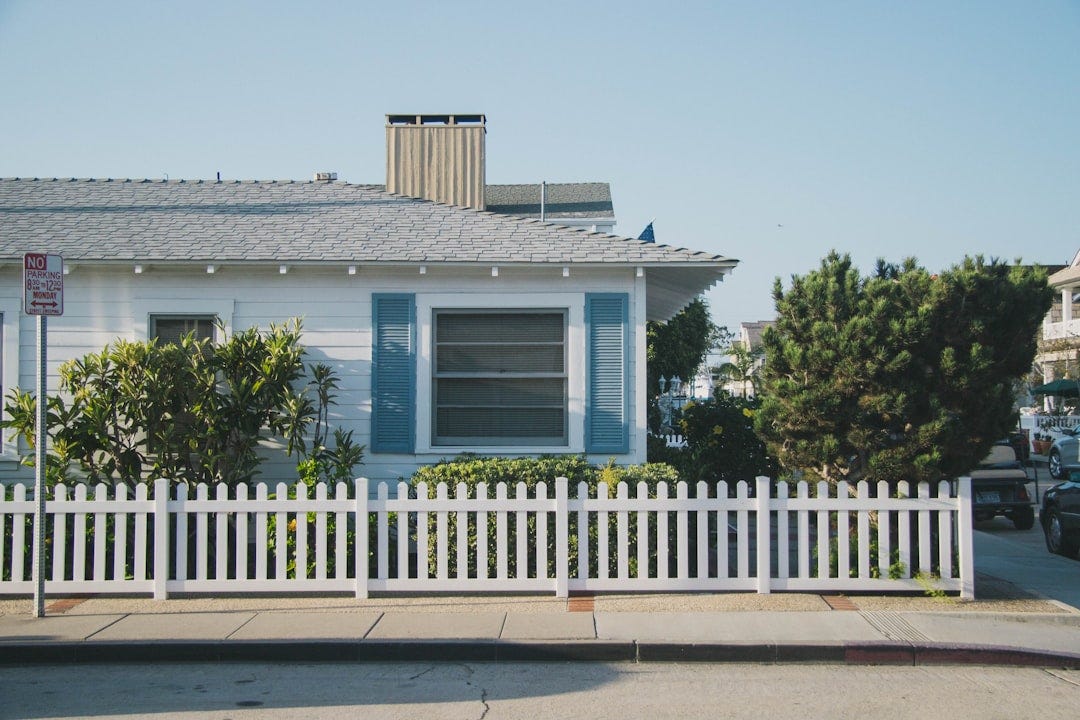
I think about my old hometown the same way. When I used to go back “home,” it was to see my parents and my old friends. Then, my parents got sick and they both died. New owners moved into the house of my childhood. Even so, for a long while, it still felt like “my” house—it still seemed possible that I could walk in the front door, head to the kitchen, and find the Lay’s potato chips in the cupboard next to the fridge. Then the new people took down the basketball hoop and changed the exterior from brown to green. They pulled up my mom’s shrubs and re-landscaped. The red door? It’s now black. In fact, nothing on my old street looks the same as it once did. And at some point—was it when I saw my old house swathed in Christmas lights, the mezuzah that once hung on the door jamb gone?—I could no longer “feel” the house. It was just a place I used to live. My house still existed in physical form, but like the Theseus, it had been completely replaced in some basic way.
That was a lot of writing for not much payoff. My point here could have been much more succinct. Something like: “You can’t go home again.” Home is Los Angeles now. I’m still surprised by those words, to be honest. Seattle? Just a city I once knew.
I’ve got two stories for you today about the places we’ve lived and the places we’ve left.
The first is “Where I Come From,” by Sudha Balagopal, published online at Fractured Lit. You’ll probably note the use of anaphora in this one, the perfect way to emphasize the narrator’s feelings.
“Hometown,” is a nonfiction piece published at Brevity and written by Sarah Dickerson. This line sums up the way many of us may feel when we go home for a visit: “This is my hometown. I thought I was homesick, again, so here I am, again, bored stiff.” Of course, you may feel differently!
TODAY’S PROMPT
Write a story about “home” or your “hometown.”
Perhaps the story is about someone who no longer lives at home. Alternatively, it can be about someone who never left.
If you need more to get going, your character can be bringing someone “home” to meet the parents. Or your character can be avoiding someone in their hometown. Or your character could have once been the “golden boy or girl” who now comes home as a failure at life. (Or—the opposite! The failure comes home a success!)
Four hundred words max. in the Comments unless you write more. Who knows anymore?
Farmington, CT, settled 1640 by whites. Before that by the Tunxis Indians. Good farming country at first, later in my time a colonial bedroom for Hartford’s insurance executives. So many handsome white clapboard houses with black shutters. Affluence, when I didn’t know what affluence was. A twisted culture of peculiar satiety, a digression in progress, eh? A classmate grows up to shoot a cop. A boy robs his neighbors’ jewels, then a package store. Gets shot in the ass on his way out the door. A suicide in a bathtub; gunshot to the head; another gunshot to the head; and one, two three men fly their planes into foggy mountains. No matter, everyone dies, and they’re all dead now. Or moved away, like me. One or two remain, which is curious to me. Why would they do that? When Clare, the youngest and sole survivor of my parent’s generation turned 90 I sort of fell in love with her. Smartest woman I ever knew, who married the widower of the bathtub suicide fifty years before. Something of a scandal. Still a knockout, too, if you can believe it. I went home when my mother died and after she was removed from the house Clare asked me over and we drank wine on her deck overlooking the Farmington Valley. Once, twice. Several times, while the maple leaves changed. Do you think you’ll come back here after this, she asked. If I did it would be to see you, I said. We wrote, but gradually she lost the ability to use a keyboard and our communications stopped. I wanted to go see her but didn’t. She turned 95, 96. Still I didn’t go. Then one day last year someone sent me her obituary, and there was no reason to go home any more.
The Place
Well, I believe that many people had a “lovely” home. One filled with joy, support and emotional stability. To the contrary I have a “place” that I am from; a “place” that I ran from when I was old enough to do so and I’ve been running ever since. Now I will read the words others write of homes. Stories with humorous anecdotes– a first spotted puppy, cats that ruled the barn, apple trees that always bore and the pink peonies that bloomed for Decoration Day. Please write that tone of ink and I will pretend it is my home too. Thank you.